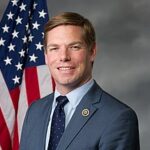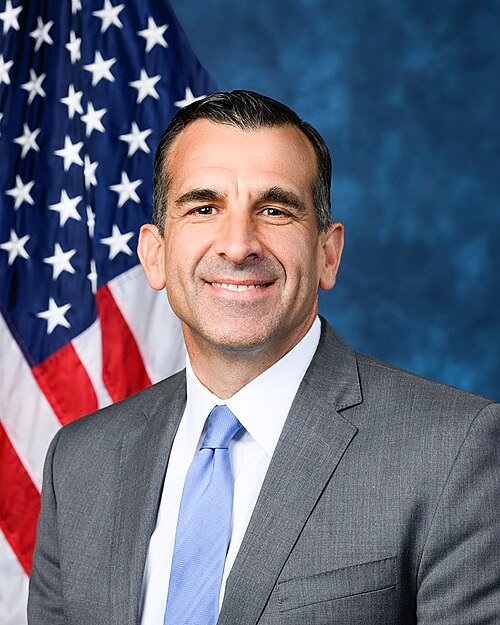

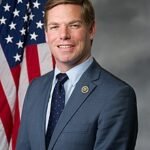
Eric Swalwell is a Democrat who represented California in the U.S. House from January 2013 until his resignation on April 14, 2026. He first represented the 15th Congressional District and, after redistricting, the 14th District. Over more than 13 years in the House, he became best known for work tied to homeland security, cybersecurity, judiciary matters, congressional oversight, and high-profile investigations involving executive power and threats to democratic institutions.
Policy Effectiveness and Legislative Record
Swalwell’s legislative record combined messaging-oriented national issues with narrower bipartisan measures that had a clearer path to enactment. Congress.gov lists more than 100 sponsored bills and more than 3,000 cosponsored bills across his House service, a volume that reflects an active legislative profile even though, as with most House members, only a small share of sponsored measures advanced all the way into law. One of the clearest recent examples was the Bottles and Breastfeeding Equipment Screening Enhancement Act, a bipartisan measure he helped lead in the House that became law in November 2025. The law updated rules for screening breast milk, formula, and related feeding equipment during air travel, giving Swalwell a tangible enacted policy result in a narrowly defined but practical area.
His committee work was often more important to his influence than stand-alone bill passage. During his House tenure he served on the Homeland Security and Judiciary Committees, and in the 119th Congress he held a senior role on the Homeland Security Subcommittee on Cybersecurity and Infrastructure Protection. That portfolio put him in a position to shape discussions on cyber defense, artificial intelligence, election security, and federal preparedness. In public committee and policy statements during 2025, he emphasized AI governance and the use of artificial intelligence to strengthen cybersecurity, while also continuing to frame national security in terms of domestic resilience and infrastructure protection. He also backed legislation on press freedom and personalized medicine, including a bipartisan 2025 bill with Rep. Dan Crenshaw on adverse drug effects tied to genetic differences.
Key Votes and Voting Record
Swalwell generally voted in line with mainstream House Democratic positions. Over time, that included support for privacy-limiting surveillance reform efforts early in his tenure, as well as later votes aligned with Democratic priorities on industrial policy, technology investment, and accountability for former President Donald Trump. For example, in 2013 he publicly highlighted his vote for the Amash-Conyers amendment aimed at limiting bulk phone-record collection, and in 2022 he backed the CHIPS and Science Act. He also played a prominent role in Trump-related accountability efforts beyond floor votes, including service as an impeachment manager in Trump’s second impeachment trial and later civil litigation tied to January 6.
On attendance, GovTrack reports that from January 2013 through September 2025 he missed 527 of 7,214 roll call votes, or 7.3 percent, which was substantially worse than the median lifetime missed-vote rate for current House members. The same dataset shows that his absences were not uniform across his career and rose sharply during periods when he was seeking higher office. That pattern matters when evaluating performance in office because committee influence and media visibility remained strong, but his floor participation became less consistent than many peers over the full span of his tenure.
Ethics and Controversies
Swalwell’s House career included multiple ethics-related episodes, and they should be separated carefully by outcome. In 2021, the House Ethics Committee opened a review connected to his interactions with Christine Fang. In a May 22, 2023 letter, the committee said it would take no further action in that matter, while also cautioning members generally about possible attempts by foreign governments to gain influence.
A separate and much more serious controversy emerged in April 2026, when the House Ethics Committee announced a new investigation into allegations that Swalwell may have engaged in sexual misconduct, including toward an employee under his supervision. The committee specifically stated that opening the investigation did not itself mean a violation had occurred. News reports in April 2026 also described criminal investigations tied to sexual assault allegations. Swalwell denied the most serious allegations, said they were false, acknowledged making past mistakes in judgment, and then resigned from Congress. Because he resigned, the House ethics investigation could no longer continue under the committee’s jurisdiction over current members. As of April 16, 2026, these allegations were publicly reported and under investigation, but they had not produced a final adjudication in court.
Constituent Service and Public Engagement
Like many long-serving House members, Swalwell maintained a standard constituent-service structure with Washington and district offices, federal-agency casework, meeting requests, newsletters, grants information, and assistance with tours and commemorations. His public-facing operations emphasized accessibility through district office hours, newsletter updates, and digital outreach. He also used social media heavily, which increased his national visibility and let him communicate quickly on breaking political issues. That style broadened his reach beyond the district, although critics sometimes argued it reinforced his national profile more than a traditional district-first model of representation.
Bipartisanship and Collaboration
Although Swalwell was a reliably partisan voice on many national fights, his record also includes bipartisan initiatives. The 2025 BABES Enhancement Act is one example, as is his work with Rep. Crenshaw on drug-gene interaction legislation and his earlier involvement in bipartisan caucus-building around critical materials policy. His legislative style often paired sharp partisan messaging on democracy, Trump, and national security with selective cross-party cooperation on technical or practical issues where coalition-building was more realistic.
Recent Focus and Public Stances
In his final period in office, Swalwell’s public agenda centered on cybersecurity, artificial intelligence, protection of democratic institutions, and continued confrontation with Trump over January 6-related issues. He also remained active on family-travel policy, press protections, and public-safety issues. His messaging frequently stressed institutional accountability, rule of law, and the need for government to respond more effectively to modern threats, especially digital and information-based threats. That combination of media visibility, committee work, and issue framing helped keep him nationally prominent even when his district-level brand was increasingly tied to his larger political ambitions.
Conclusion
Eric Swalwell’s House tenure was marked by a mix of visible committee work, strong alignment with Democratic priorities, active media engagement, and occasional bipartisan policy wins. His record shows most influence in oversight, cybersecurity, judiciary-related issues, and national political messaging rather than in a large volume of landmark enacted laws. At the same time, his attendance record over the long term was weaker than many colleagues, and his resignation in 2026 under the weight of serious misconduct allegations became the defining event at the end of his congressional career. Any assessment of his performance in office therefore includes both substantive committee and legislative activity and the significant reputational and ethical issues that overshadowed his final months in public office.
Verified against House Clerk service dates and resignation record, Congress.gov activity totals, House and committee pages on assignments and policy work, House Ethics Committee statements and letters, GovTrack vote statistics, White House and congressional materials on the BABES law, and Reuters/AP coverage of the 2026 allegations and resignation. ([House Clerk][1])
The statement that the earlier Fang-related ethics matter ended with no further action comes from the House Ethics Committee’s May 22, 2023 letter. The statement that the 2026 sexual-misconduct matter was opened for investigation, without implying guilt, comes from the committee’s April 13, 2026 announcement.
The description of the BABES Enhancement Act becoming law in November 2025 is supported by House, Senate, White House, and GovInfo materials. His recent policy focus on AI and cybersecurity and his bipartisan 2025 drug-effects bill with Rep. Crenshaw are supported by committee and House press materials. ([Swalwell House][2])
The summary of the 2026 allegations, resignation, and the distinction between allegations and proven findings is based on House Ethics, Reuters, and AP reporting. ([House Committee on Ethics][3])
[1]: https://clerk.house.gov/members/S001193 “Office of the Clerk, U.S. House of Representatives”
[2]: https://swalwell.house.gov/media-center/press-releases/swalwell-duckworth-legislation-supporting-parents-traveling-with-breast-milk-officially-becomes-law “Swalwell, Duckworth Legislation Supporting Parents Traveling …”
[3]: https://ethics.house.gov/press-releases/statement-of-the-chairman-and-ranking-member-of-the-committee-on-ethics-regarding-representative-eric-swalwell/ “Statement of the Chairman and Ranking Member of the Committee on Ethics Regarding Representative Eric Swalwell – House Committee on Ethics”
- Ballotpedia — Eric Swalwell
- OnTheIssues — Eric Swalwell Policy Positions
- Congress.gov — Member Profile & Bills
- GovTrack — Voting Record & Report Card
- Voteview — Roll-Call Voting & DW-NOMINATE Ideology Scores
- Vote Smart — Key Votes & Biography
- C-SPAN — Video Archive & Floor Appearances
- FEC — Candidate Committee Financial Data
- House Clerk — Official Member Profile & Disclosures
- Official House.gov — Representative Swalwell
- OpenSecrets — Lobbying Contributions & Ties
- FEC — Swalwell for Congress Committee (Principal Campaign)